2026 Trout Friendly Landscaper & Business Certification
The 2026 Trout Friendly Landscaper and Business Certification is now closed. We encourage certified landscapers to refer back to this webpage for helpful videos, information, and resources throughout the year. The 2027 Trout Friendly Landscaper and Business Certification will be announced in March / April 2027. Please reach out to Cam Bahnsen at cam@tetonconservation.org or 307-733-2110 with any questions. Thank you!
VIDEOS:
1. Limit Fertilization
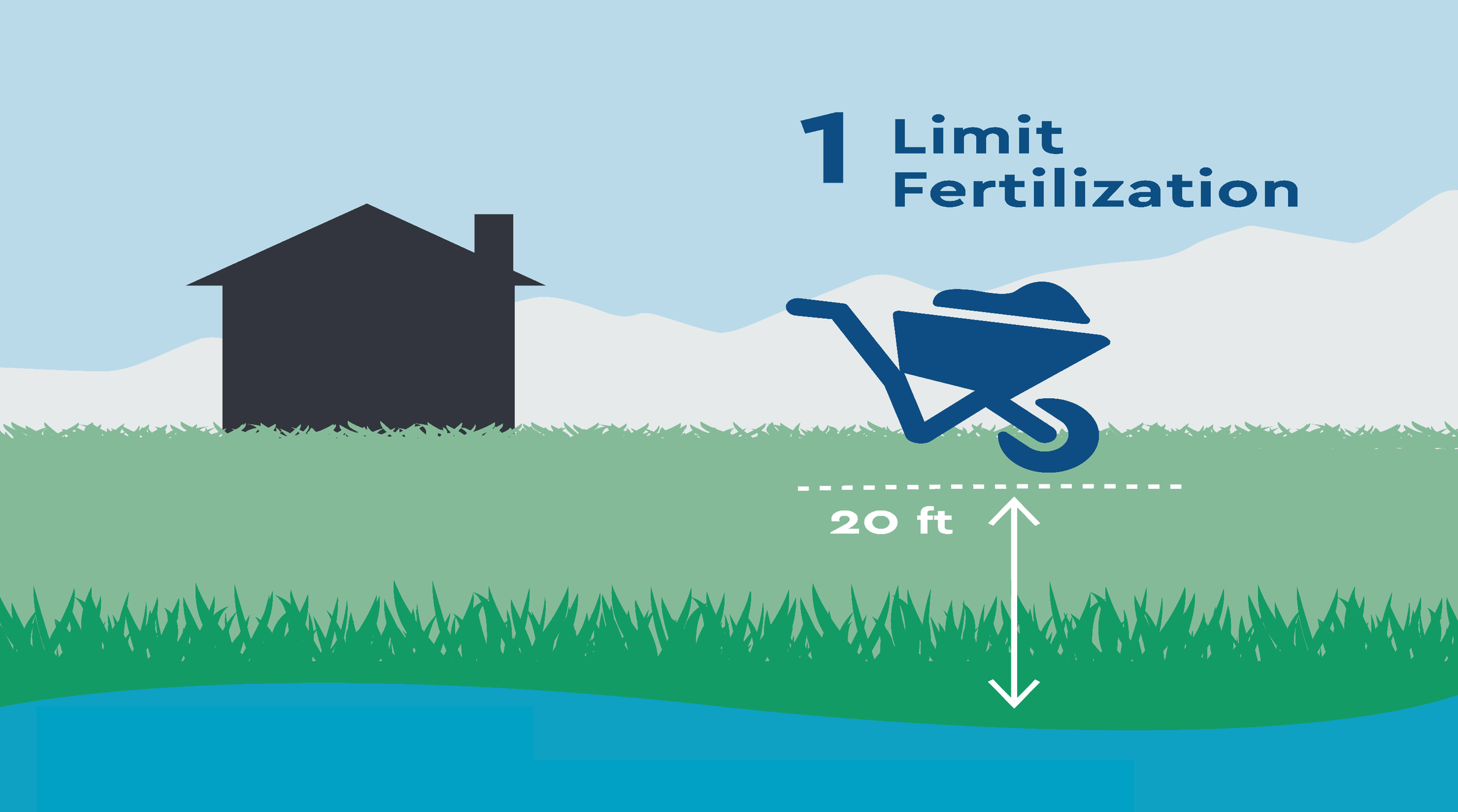
Use slow release or organic fertilizer only if needed, not to exceed 2 pounds of nitrogen per 1,000 square feet of yard per year. Do not fertilize within 20 feet of water. Phosphorus levels in our soils are typically sufficient and do not require supplementing.
Limit Fertilization
Additional Tips:
Test your soil to determine how much and what proportion of nutrients your landscape actually needs. Teton Conservation District offers a 50% cost-share for soil testing services (up to $200 per landowner) through participating laboratories. Agricultural producers are exempt from the $200 cap. Visit Teton Conservation District’s website to learn about soil testing cost-share program.
Leave clippings on the lawn - they may provide enough nitrogen.
Use organic fertilizers such as compost, manure, feather meal, bone meal,, etc.
Don’t fertilize if not needed.
Calibrate equipment and calculate for precision landscaping applications.
2. Be Water Wise
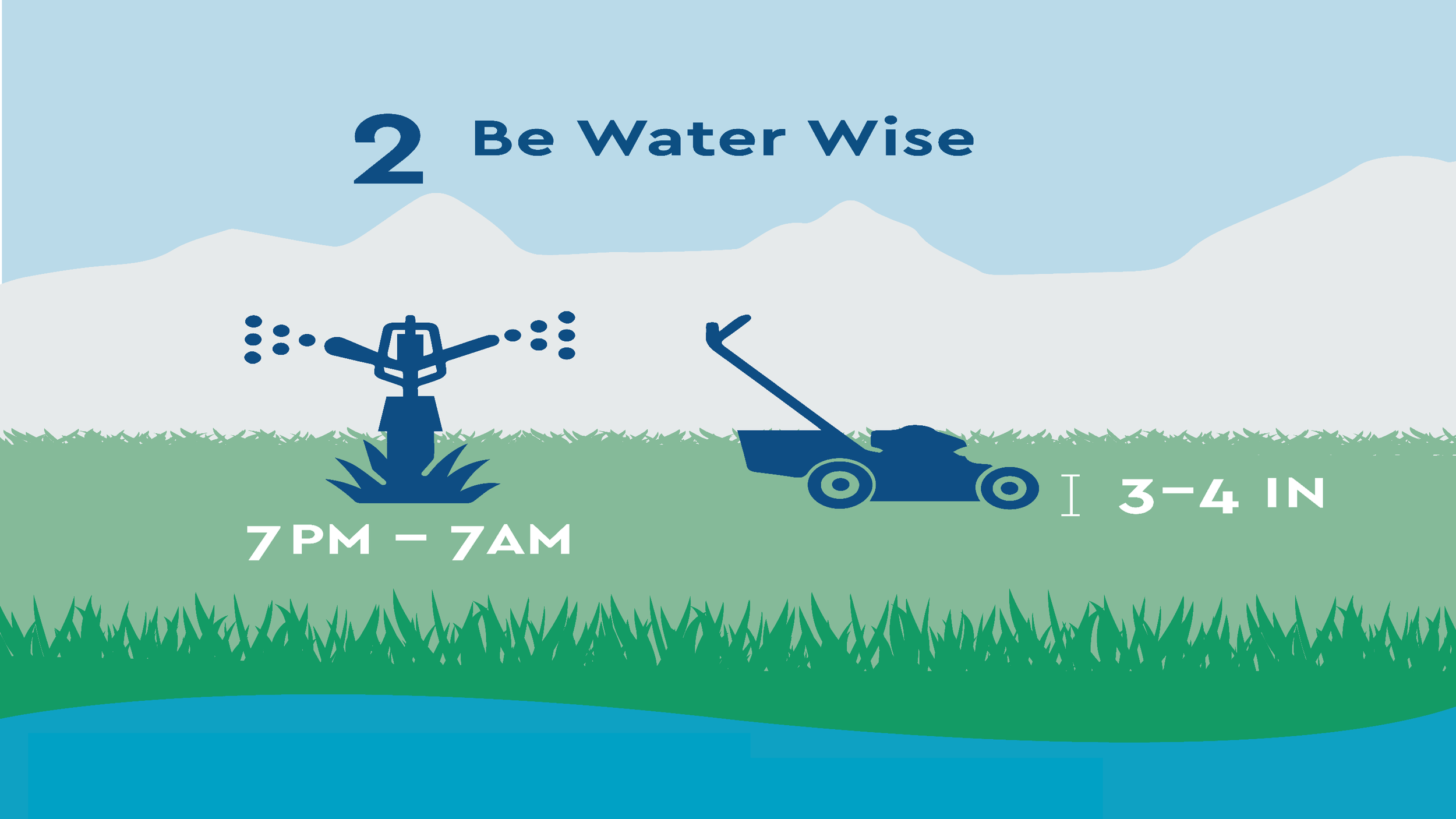
Do not water when it's raining. Sprinkle at dawn or dusk every other day. Raise the mower blade to a mow height of 3 to 4 inches so less water and fertilizer are needed.
Be Water Wise
Additional Tips:
Establish a no-mow zone, an area where you let the grass grow tall and reduce irrigation in that area.
Mulch and/or install drip irrigation for flower beds, shrubs and trees to reduce evaporation and weeds.
Ensure adequate organic matter in soil to improve water holding capacity, thus needing less water.
Install sensors or smart controllers to automatically turn off your irrigation system when it rains.
Invest in an irrigation audit and follow the recommendations.
3. Plant Natives and Maintain Streamside Buffers
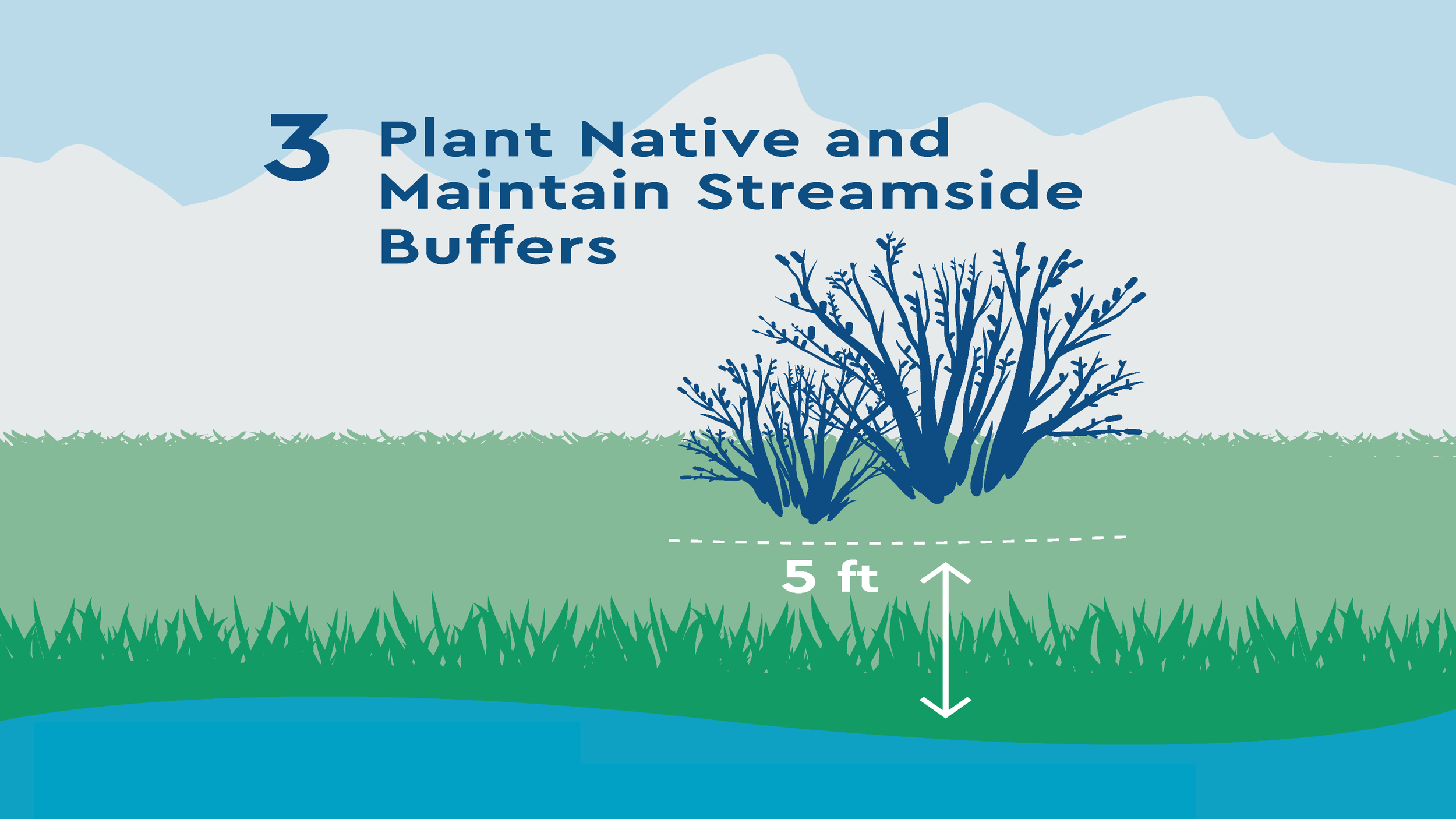
Maintain a minimum buffer of 5 feet of unmanicured landscaping around waterbodies (20 feet is recommended).
Plant Natives and Maintain Streamside Buffers
Additional Tips:
Keep existing native plants, shrubs and trees – especially near the stream!
Maintain a 20 foot buffer of native shrubs like willows, alders, or sedges along all waterbodies.
Convert your lawn (or other areas) from Kentucky blue grass or non-native species to drought-tolerant native plants that require less water, fertilizer, and maintenance.
Reach out to Teton Conservation District for a free native plant consultation, or invest in one with a landscape architect or landscaper specializing in native plants and follow the recommendations.
4. Use Herbicides and Pesticides Appropriately
Only apply herbicide for state and county listed noxious weeds, using spot spraying or mechanical removal techniques where appropriate.
Use Herbicides and Pesticides Appropriately
Additional Tips:
Know what weeds you are dealing with, when it is best to treat them, and what is the most effective herbicide or pesticide to apply. More information is available on the Teton County Weed and Pest website.
Request a noxious and invasive weed audit from Teton County Weed and Pest and follow the recommendations.
Use natural herbicides and pesticides when appropriate.
Never water after application of herbicides or pesticides.