
Soil Health & Sampling
Soil is the foundation of our ecosystem, playing a critical role in food production, water quality, air health, and climate stability. Healthy soils provide habitat for organisms, anchor plants, filter and store water, recycle nutrients, and support biodiversity. Protecting and improving soil health benefits not only our ability to grow food, but also our forests, wetlands, and the ability to maintain our built environments.
what is soil health?

Healthy soils support abundant food production. Photo from Slow Food in the Tetons Farming Camp. PC: Morgan Buremmer
Soil health is the ability of soil to function as a living ecosystem that sustains plants, animals, and people. We offer guidance on practices that improve soil health, including:
Use of Organic Amendments – Adding compost or animal manure to enrich soil fertility.
Cover Cropping – Planting cover crops to improve soil structure, reduce erosion, and increase organic matter.
Residue Management – Keeping plant residue (stalks, grass clippings, roots) on the soil surface to maintain moisture and protect against erosion.
Reduced Tillage – Minimizing soil disturbance to promote soil structure and microbial health.
Erosion Control – Implementing strategies to reduce runoff and maintain soil integrity.
( To learn more about TCD’s Agricultural Conservation Planting Program, which provides grants towards the implementation of conservation tillage, cover crop, and/or drill seeding practices: Click here).
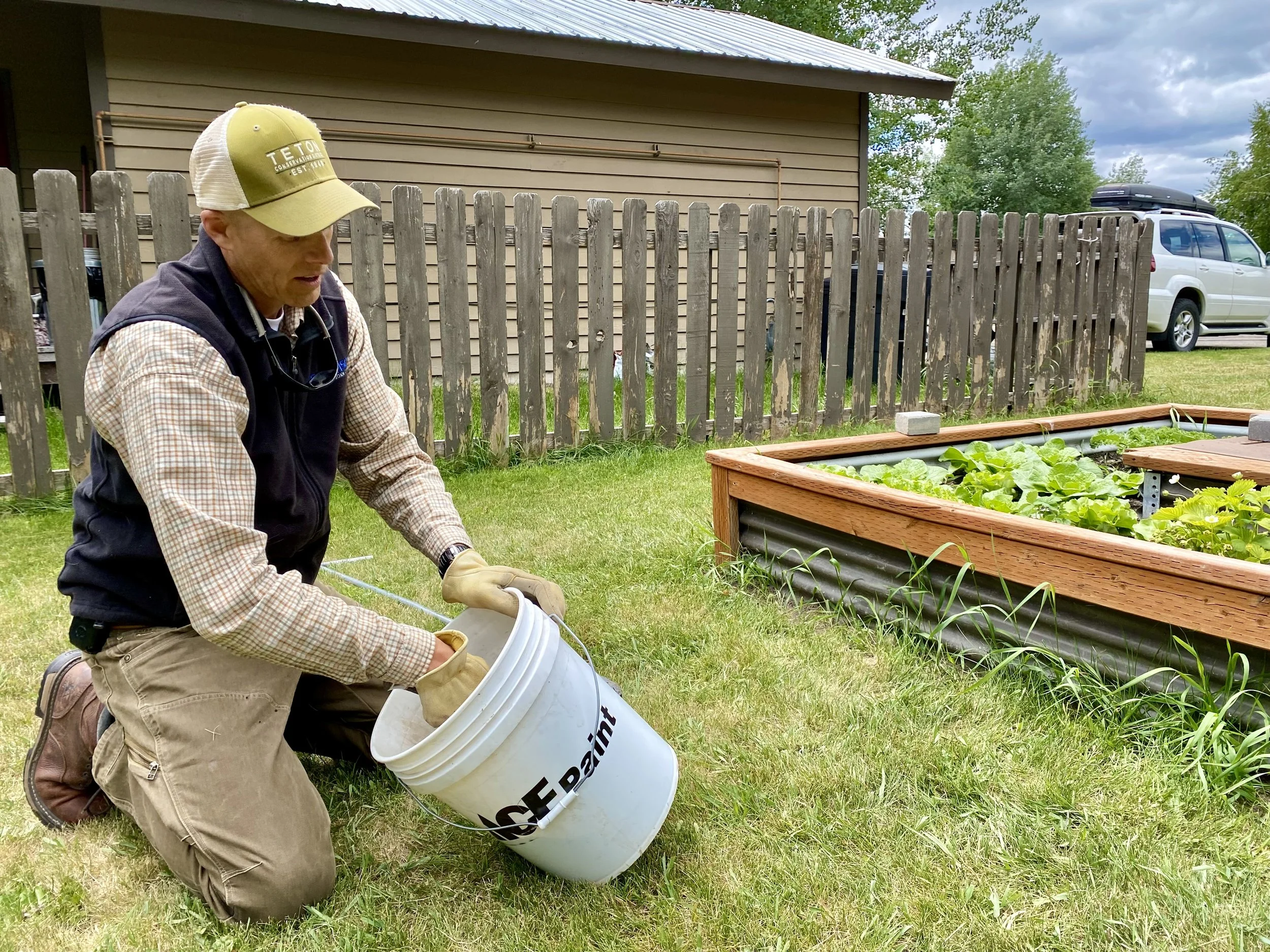
Teton Conservation District helps with soil sampling for lab analysis, supporting local gardeners in assessing soil health.
next steps for soil sampling & analysis
Whether you're a farmer, rancher, gardener, or want to understand your lawn’s health, soil testing provides valuable insights for informed land management decisions. To get started, choose a laboratory and follow their instructions for collecting and submitting a sample. Several labs in the region provide these services, including Colorado State University’s Soil, Water and Plant Testing Laboratory (link here) and Ward Laboratories (link here). Teton Conservation District (TCD) staff are available to assist with sampling design, on-site sample collection and to help select the lab analysis that fits your needs.
TCD offers a 50% cost-share per soil sample, up to $200 per residential landowner, for samples analyzed by a university laboratory or a lab participating in the North American Proficiency Testing program. Agricultural landowners are eligible for 50% cost share of total costs, with prior approval and as budget allows. To request support or learn more about soil sampling and analysis, contact Robb Sgroi at robb@tetonconservation.org or call 307.733.2100.